
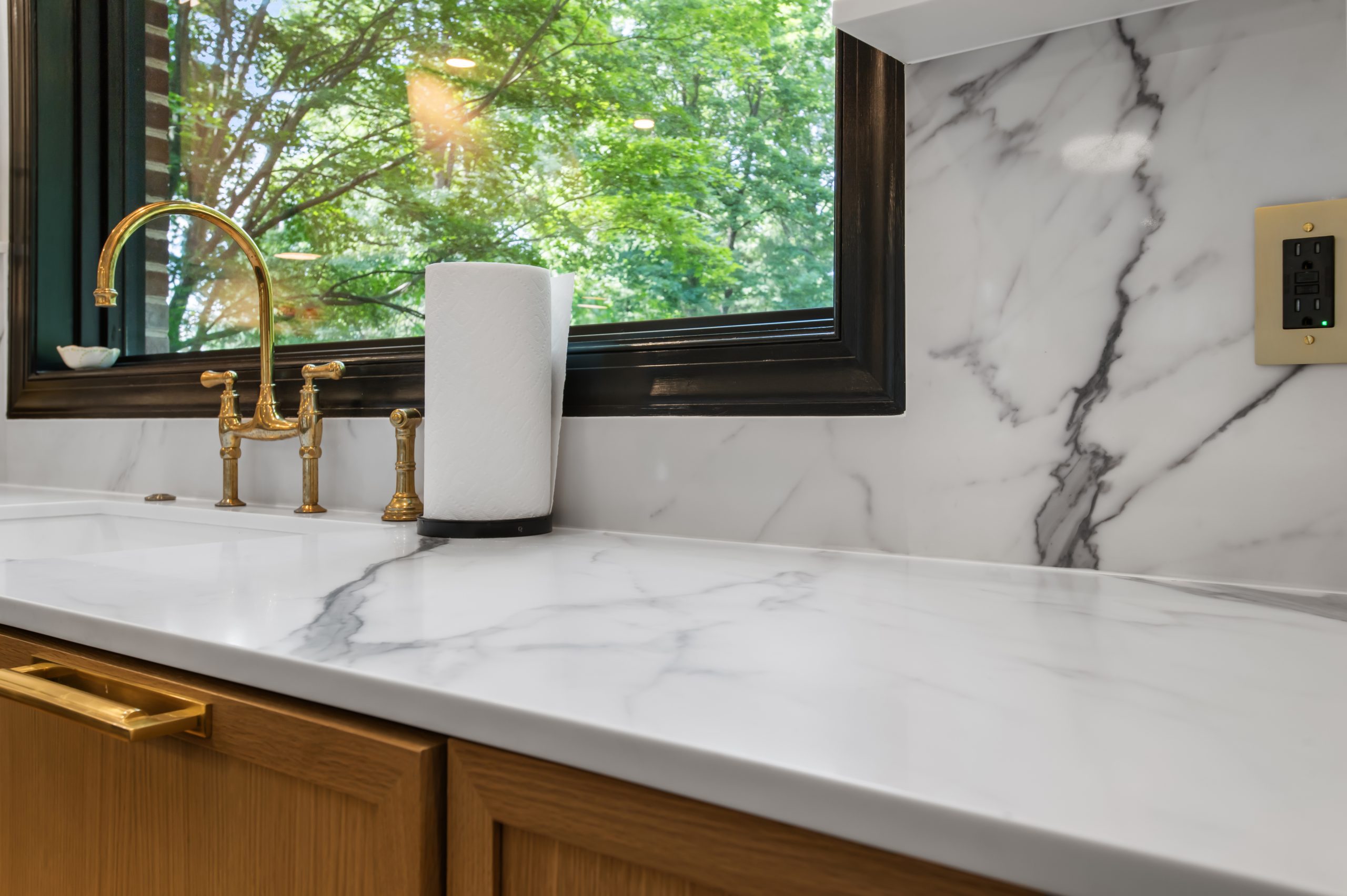
Transforming Your Kitchen with Quartz Countertops: A Step-by-Step Look at the Installation Process
November 10, 2025
If you’re considering a kitchen remodel in the Greater Philadelphia area, there’s a good reason why quartz kitchen countertops are topping design wish lists. This engineered stone offers the beauty of natural stone without the maintenance headaches. Non-porous, durable, and endlessly customizable, quartz has become a go-to surface for homeowners who want both luxury and longevity.
But what actually happens once you’ve chosen your dream slab? At Akropolis Marble & Granite in Colmar, PA, every quartz countertop installation follows a precise, well-managed process that ensures your kitchen transformation is smooth from start to finish.
1. The In-Home Consultation and Design Planning
Every successful countertop project starts with a conversation. During your initial consultation, our team measures your space, discusses your kitchen goals, and helps you select a quartz color and finish that complements your cabinetry and lifestyle.
Many homeowners are drawn to quartz because of its versatility — from bright whites like Calacatta to soft grays and modern veining patterns. According to the Houzz 2024 U.S. Kitchen Trends Study, over 42% of homeowners now choose quartz for its easy maintenance and design flexibility.
This stage also includes selecting your edge profile, sink cutout, and backsplash integration — the design details that make your kitchen uniquely yours.
2. Digital Templating for Precision Fit
Once the design is finalized, Akropolis uses advanced digital templating technology to capture exact measurements of your countertops. This method replaces older manual templates with laser precision mapping, allowing fabricators to design perfectly fitted slabs that account for walls, corners, and appliance spacing.
This step is critical — it’s where craftsmanship meets technology. A precise template means your quartz counters will align seamlessly with cabinets, sinks, and backsplashes, minimizing on-site adjustments.
3. Professional Fabrication in Our Local Shop
After templating, the real transformation begins in our fabrication facility right here in Colmar. Your chosen quartz slab is cut, edged, and polished using specialized machinery.
Quartz is made from 90–95% crushed natural quartz combined with resins and pigments to create a non-porous, low-maintenance surface. Because of its engineered composition, it